




Implant or fixed bridge, You have probably heard about the treatment options available to you if you have lost one or more teeth.
Missing teeth, whether due to decay or trauma, is a condition that affects millions of people. In addition, losing a tooth can alter your aesthetics and appearance as well as your chewing function and even your speech.
As a result, various dental techniques and materials have been developed to provide an efficient solution to tooth loss.
However, the multiple options may lead you to doubt which might be the best alternative.
In this article, we will discuss the main differences between implants and fixed bridges to help you decide which is your best option.
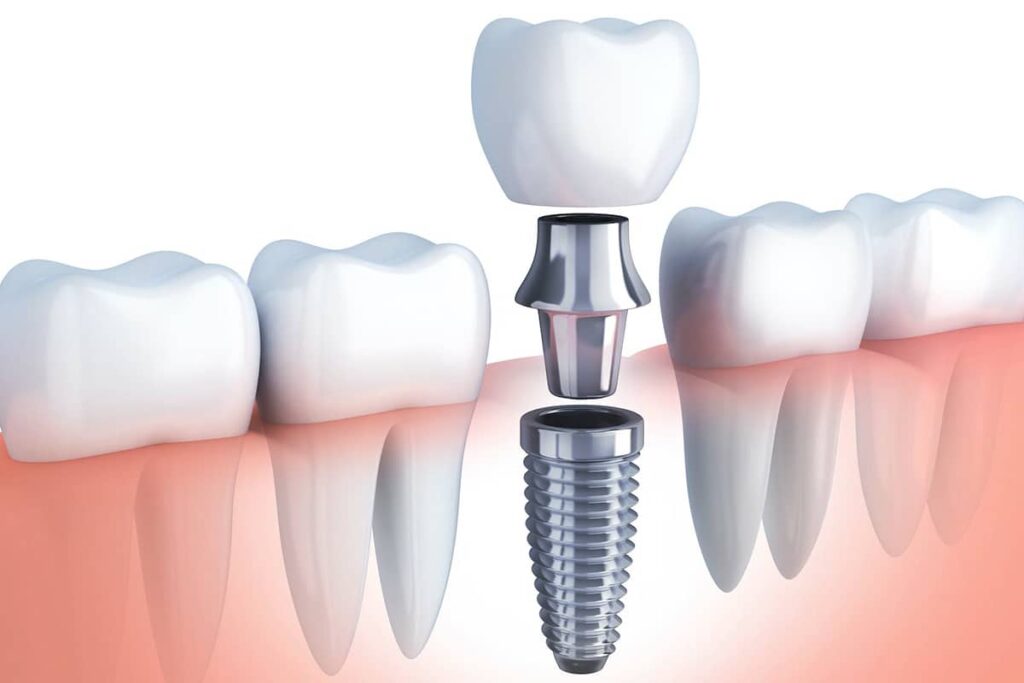
Dental implants
The dental implants are prosthetic devices that are screwed into the bone to simulate the dental root, in order to place a crown on them.
The dental implants can be used to replace single teeth or groups of teeth in cases of multiple missing teeth. They can even be used as bases for total prostheses in patients with no teeth in the mouth.
One of the main features of implants is the similarity they have to natural teeth. Because of the way they are designed, dental implants feel almost the same as having a real tooth instead of a foreign object. What's more, they function just like a natural tooth would.
Implant or fixed bridge Which is the best option?
Choose the safest solution for your smile: ask for a professional assessment and find out whether an implant or a fixed bridge is right for you.
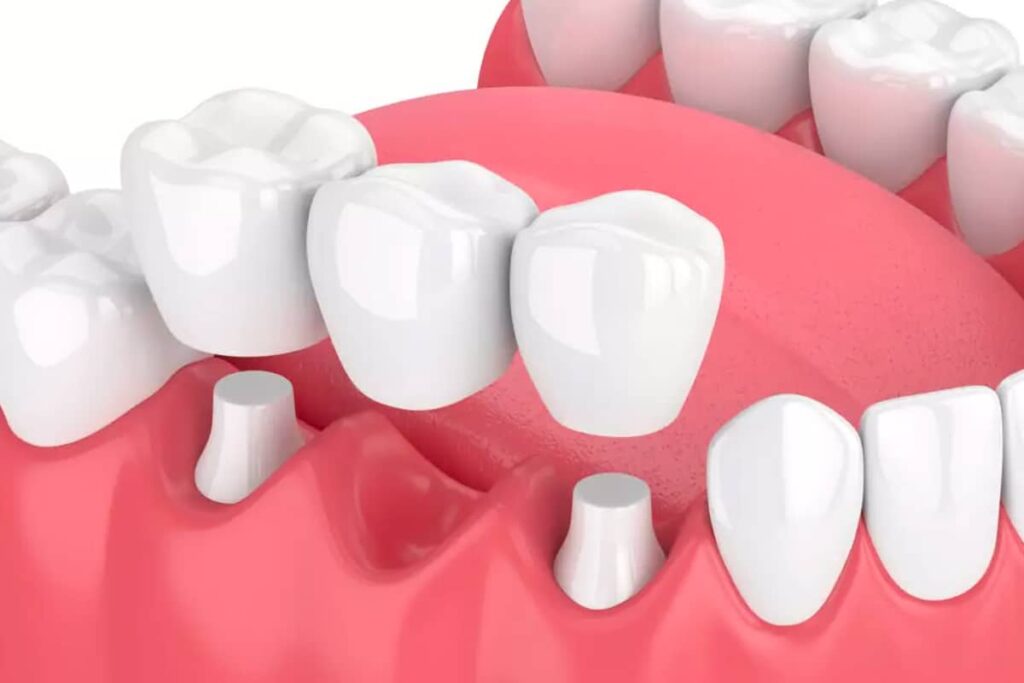
Fixed bridge
The fixed bridge, on the other hand, is a type of restoration used to replace one or more missing teeth with crowns that are placed on either side of the space where the teeth have been lost.
The crowns of both abutment teeth are joined by a crown that fills the space left behind by the missing tooth, called a phantom.
Additionally, these restorations can be made with different materials such as porcelain, ceramic, lithium disilicate or even metal. This allows the dentist to have different options to choose the material that best suits the needs of the patient and the area to be restored, whether aesthetic, functional or both.
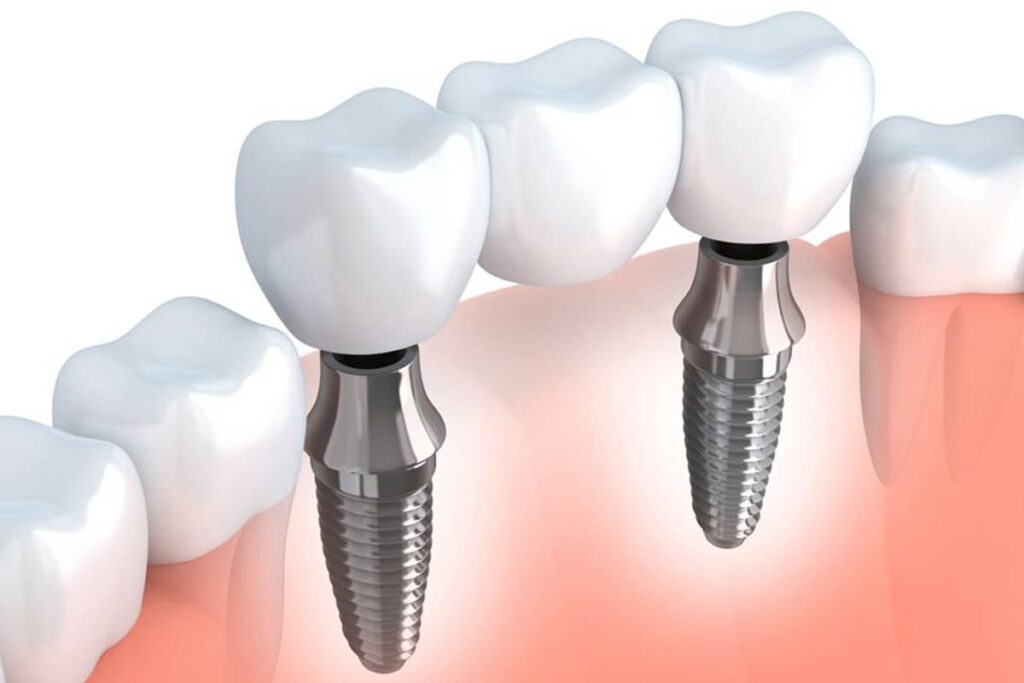
Implant vs. fixed bridge
Both types of restorations have a number of advantages and disadvantages, which should be evaluated to determine the best treatment for your needs.
Although the implants have a success rate of 98%, successful placement requires an extensive preparation phase. Therefore, various laboratory tests, x-rays and even CT scans are necessary. Sometimes the quality or quantity of bone is not ideal and bone grafting is necessary.
Finally, it is necessary to wait 4 to 6 months after surgery to make the crown that will be placed on the implant.
In contrast, the fixed bridge requires less time and has a simpler preparation phase, where a few X-rays and impressions are sufficient for the analysis of the case.
However, in order to place a fixed bridge, it is necessary to wear down the teeth adjacent to the missing tooth. This is a major disadvantage in cases where these teeth are healthy, as the worn enamel and dentine cannot be restored.
At the same time, fixed bridges require meticulous care, as they are more prone to retain food debris and plaque.
Final result
Despite the differences, both alternatives offer excellent results in terms of aesthetics and function.
To determine the best treatment based on your needs, it is necessary to consider working time, cost and maintenance.
Dental implants offer more natural results, but are more expensive and require months of waiting and work.
Fixed bridges, on the other hand, are cheaper, easier to make and can be done in a few sessions. However, care can be more complicated.
Take all these characteristics into account, consult your dentist and you will undoubtedly choose the ideal option for you.
